

Quick Answer
Clinical trial monitoring is the process of overseeing clinical studies to protect participant safety, maintain data accuracy, and ensure compliance with regulatory requirements. It includes on-site, remote, risk-based, and centralized monitoring approaches that help research teams identify issues early, improve study quality, and deliver reliable clinical trial results.
Key Takeaways
- Clinical trial monitoring helps protect participant safety and ensure reliable study results.
- Modern clinical trials use on-site, remote, risk-based, and centralized monitoring to improve oversight.
- Effective monitoring supports regulatory compliance, data accuracy, and overall study quality.
- Collaboration between sponsors, research teams, and participants is essential for successful clinical trials.
- As technology advances, clinical trial monitoring continues to become more efficient and patient-focused.
Introduction
Over the past few decades, clinical trials have evolved alongside advances in technology, regulations, and research methods. One of the biggest examples was the COVID-19 pandemic. As vaccines and treatments were developed in record time, many people wondered how clinical trials could move so quickly without compromising participant safety. The answer was effective clinical trial monitoring. Behind every successful study, monitors helped ensure research teams followed the approved protocol, participant safety remained a top priority, and study data was accurate and reliable.
The pandemic also accelerated the adoption of remote and centralized monitoring, changing how clinical trials are managed today. As research continues to evolve, clinical trial monitoring remains essential for protecting participants, maintaining data quality, and supporting safe, compliant, and successful clinical research.
In this blog, we’ll explore its purpose, the different types of monitoring, and its role in improving patient safety.
What Is Clinical Trial Monitoring?
Clinical trial monitoring is the process of overseeing a clinical study to ensure it is conducted according to the approved protocol, good clinical practice (GCP) guidelines, regulatory requirements, and ethical standards.
Simply put, monitoring acts as a quality control system supported by quality assurance practices throughout the entire clinical trial. It verifies that participant rights are protected, study procedures are followed correctly, and the data collected is complete, accurate, and reliable.
Clinical trial quality monitoring is a core operational component of clinical trial management. It begins before the first participant is enrolled and continues until the study is completed and closed. During this time, monitors work closely with investigators, research coordinators, sponsors, and study staff to identify potential issues, resolve them quickly, and keep the trial on track.
Without proper monitoring, protocol deviations, inaccurate documentation, or delayed safety reporting could affect both participant safety and the credibility of the study results.
What Is the Purpose of Clinical Trial Monitoring?
The purpose of clinical trial monitoring is to ensure every study is conducted safely, ethically, and in compliance with regulatory requirements while maintaining high-quality data.
Its key objectives include:
Protect Participant Safety:
Medical monitoring ensures participant safety by verifying informed consent, protocol compliance, and timely reporting of adverse events.
Maintain Data Accuracy:
Confirms that clinical trial data is complete, accurate, and reliable.
Ensure Regulatory Compliance:
Helps research sites follow good clinical practice (GCP) and study protocols.
Identify Issues Early:
Detects protocol deviations and data inconsistencies before they impact the study.
The Four Main Types of Clinical Trial Monitoring
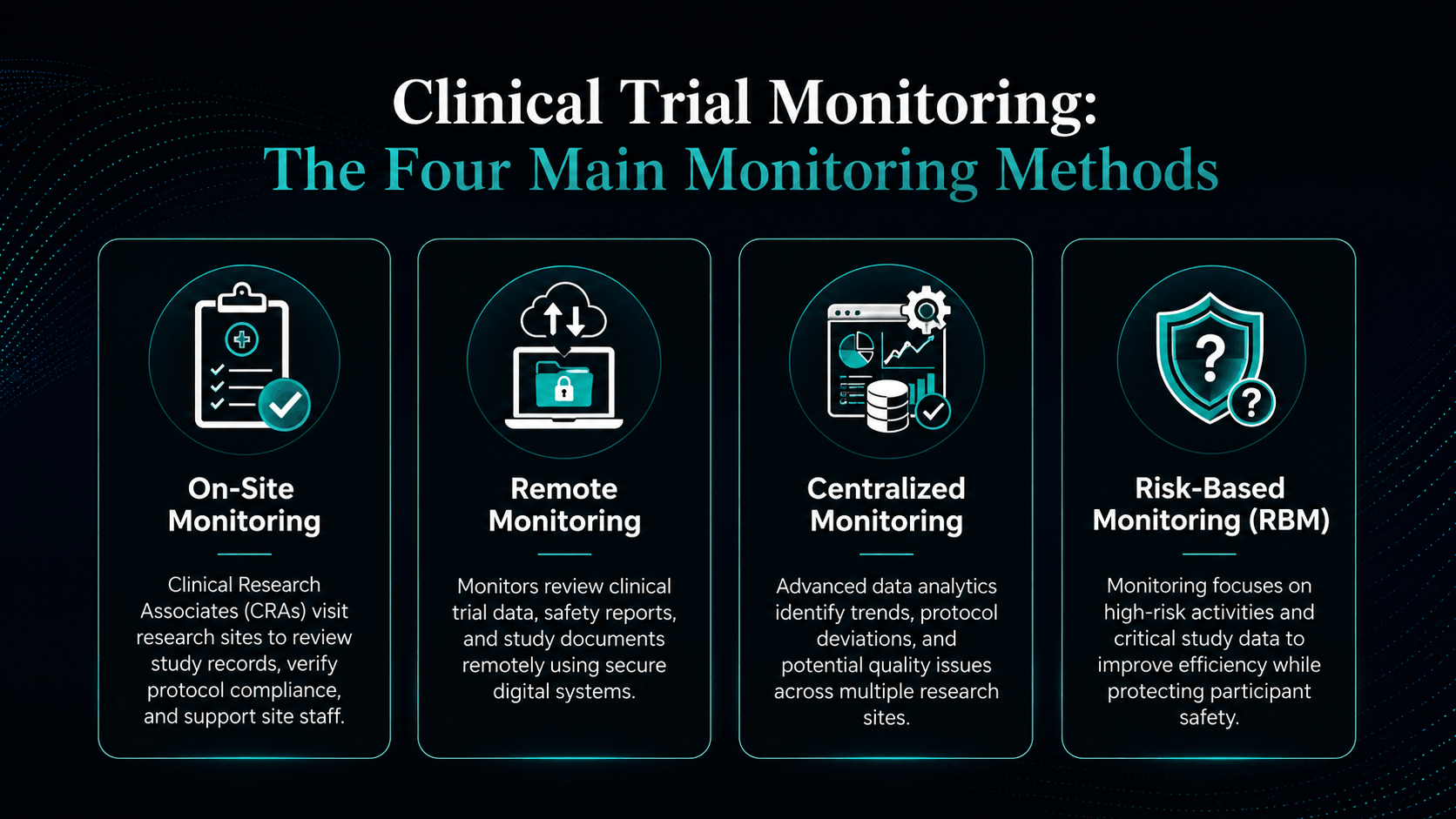
No single monitoring approach works for every clinical trial. The type of monitoring used depends on factors such as the study design, participant population, potential risks, regulatory requirements, and the complexity of the trial. Today, many sponsors use a combination of monitoring methods to maintain participant safety, improve data quality, and optimize study resources.
1. On-Site Monitoring:
On-site monitoring is the traditional approach to clinical trial oversight. In this method, a clinical research associate (CRA) visits the research site as part of the overall site monitoring process to review study activities, verify documentation, and ensure the trial is being conducted according to the approved protocol.
During these visits, monitors typically:
- Review source documents and participant records.
- Verify informed consent documentation.
- Assess investigational product accountability.
- Evaluate protocol compliance.
- Discuss study progress and address site concerns with the research team.
Although advances in technology have reduced the frequency of on-site visits for many studies, they remain an essential part of monitoring complex trials, high-risk studies, and sites that require additional support.
2. Remote Monitoring:
Remote monitoring allows clinical trial activities to be reviewed without requiring monitors to visit the research site. Using secure electronic systems and digital documentation, monitors can assess study progress from virtually anywhere while maintaining regulatory compliance.
- Remote monitoring commonly includes reviewing:
- Electronic Case Report Forms (eCRFs).
- Safety reports and adverse event documentation.
- Participant enrollment and retention.
- Data queries and study documentation.
This approach became increasingly common during the COVID-19 pandemic and continues to improve efficiency by allowing faster issue identification, reducing travel costs, and providing more flexible oversight.
3. Risk-Based Monitoring (RBM):
Risk-based monitoring (RBM) is a proactive approach that focuses monitoring efforts on the most critical aspects of a clinical trial rather than reviewing every activity equally. By identifying potential risks early, sponsors can allocate resources where they are needed most while maintaining high standards for participant safety and data quality.
Risk-based monitoring in clinical trials typically prioritizes:
- Participant safety and critical endpoints.
- High-risk study procedures.
- Sites with unusual performance trends.
- Protocol deviations and data quality issues.
Rather than replacing traditional monitoring, RBM complements other monitoring strategies by making oversight more efficient and data-driven.
4. Centralized Monitoring:
Centralized monitoring uses advanced data analytics, statistical tools, and central lab coordination to monitor multiple research sites simultaneously. Instead of relying solely on-site visits, sponsors can analyze study data in real time to identify trends and potential concerns across the entire trial.
Centralized monitoring helps detect:
- Missing or inconsistent data.
- Unusual enrollment or reporting patterns.
- Site performance differences.
- Potential protocol deviations.
- Emerging quality or safety concerns.
When combined with remote and on-site monitoring, centralized monitoring provides continuous oversight and supports faster, more informed decision-making throughout the study.
Specific Roles and Responsibilities in Clinical Trial Monitoring
Successful clinical trial monitoring requires the expertise of multiple stakeholders working together to ensure studies are conducted safely, ethically, and according to regulatory standards. While team structures vary between studies, each role contributes to the overall success of the trial.
Below is an overview of the different roles that make up a clinical trial monitoring team.
Clinical Research Associate (CRA):
Monitors research sites, reviews study documentation, and verifies compliance with the study protocol and regulatory requirements.
Principal Investigator (PI):
Leads the clinical trial at the research site and is responsible for participant safety and the overall conduct of the study.
Clinical Research Coordinator (CRC):
Coordinates daily study activities, manages participant visits, and maintains accurate study records.
Sponsor or Clinical Research Organization (CRO):
Provides overall trial oversight, develops monitoring plans, and supports study quality and regulatory compliance throughout the trial.
The Participant’s Role in Clinical Trial Monitoring
Clinical trial monitoring is a team effort, and participants play an important role in its success. By following study requirements, attending scheduled visits, and communicating openly with the research team, participants help support their own safety while contributing to accurate and reliable research outcomes.
What Participants Can Expect During Monitoring:
Throughout the study, participants may be asked to take part in several activities that support their safety and help researchers collect accurate study data. These may include:
- Attend scheduled study visits and health assessments.
- Review and sign informed consent documents before participating.
- Report side effects, new symptoms, or changes in their health promptly.
- Complete questionnaires, patient diaries, or electronic patient-reported outcome (ePRO) tools when required.
- Communicate openly with the research team about their progress or concerns.
- Participate in follow-up visits if additional safety evaluations are needed.
How Participants Benefit from Effective Monitoring:
Effective clinical trial monitoring protects participants throughout every stage of the study while maintaining the quality of the research. Some of the key benefits include:
- Enhanced Safety: Ongoing oversight helps identify and address potential safety concerns as early as possible.
- High-Quality Care: Study procedures are consistently performed according to the approved protocol and ethical standards.
- Protection of Participant Rights: Monitoring helps safeguard informed consent, privacy, confidentiality, and participant well-being.
- Reliable Research: Accurate data collection contributes to the development of safe and effective future treatments.
- Greater Confidence: Independent monitoring provides reassurance that the study is being conducted responsibly and transparently.
How Clinical Trial Monitoring Ensures Patient Safety
Clinical trial monitoring protects participants at every stage of a study. It helps ensure that:
- Informed consent is obtained before any study procedures begin.
- Eligibility criteria are followed to enroll appropriate participants.
- Adverse events are documented and reported promptly.
- Investigational products are handled correctly.
- Protocol deviations are identified and addressed quickly.
- Participants receive appropriate follow-up throughout the trial.
Does Your Trial Have the Right Clinical Oversight?
Support better clinical decisions with experienced medical monitoring throughout your study.
The Future of Clinical Trial Monitoring
Clinical trial monitoring is evolving with advances in digital technology and data analytics. Tools such as artificial intelligence (AI), machine learning, and electronic source records are helping sponsors identify risks earlier, improve data quality, and make faster, more informed decisions.
At the same time, hybrid monitoring models that combine on-site, remote, and centralized monitoring are becoming increasingly common. As clinical trials become more decentralized and technology-driven, effective monitoring will continue to play a vital role in protecting participants, maintaining regulatory compliance, and ensuring reliable research outcomes.
Conclusion
Clinical trial monitoring is much more than a regulatory requirement. It is a critical process that helps protect participants, maintain data integrity, and ensure clinical trials are conducted safely and ethically. As research continues to evolve with digital technologies and risk-based approaches, effective monitoring remains essential for delivering reliable results and advancing medical innovation.
Whether you’re managing a single-site study or a global clinical trial, partnering with an experienced monitoring team can make a significant difference. Minerva Research Solutions provides comprehensive clinical trial monitoring services to help sponsors, CROs, and research sites maintain compliance, improve study quality, and successfully navigate every stage of the clinical trial lifecycle.
Frequently Asked Questions
What is clinical trial monitoring?
Clinical trial monitoring is the ongoing oversight of a clinical study to ensure it follows the approved protocol, protects participants, and collects accurate, reliable data.
Why is clinical trial monitoring important?
It helps protect participant safety, maintain data quality, identify issues early, and ensure compliance with regulatory and ethical standards.
What are the four types of clinical trial monitoring?
The four main types are on-site monitoring, remote monitoring, risk-based monitoring (RBM), and centralized monitoring.
How to improve clinical trial site monitoring?
Clinical trial site monitoring can be improved through risk-based strategies, regular staff training, accurate documentation, and effective communication.
How does clinical trial monitoring protect patients?
It helps identify safety concerns early, ensures protocols are followed, and supports ethical research practices.